We accept USD, EUR, PLN and 19 other currencies
Seamless communication in English and Polish
We always meet deadlines - no more dragging projects

Multilingual website with online training sales

A multi-market sales engine for a training company

See how we built two multilingual websites for Bonapi, for the Dutch and Polish markets, and connected the course offer, sign-ups and online payments to the platform that handles orders. From needs analysis and UX design to the WordPress migration and full launch.

/ Project facts

Client

Bonapi

Industry

Technologies

Scope of work

business analysis target audience analysis information architecture UX design and wireframing website UI design multilingual website development course booking and online payments WordPress to Astro migration Sanity CMS implementation GA4 analytics setup
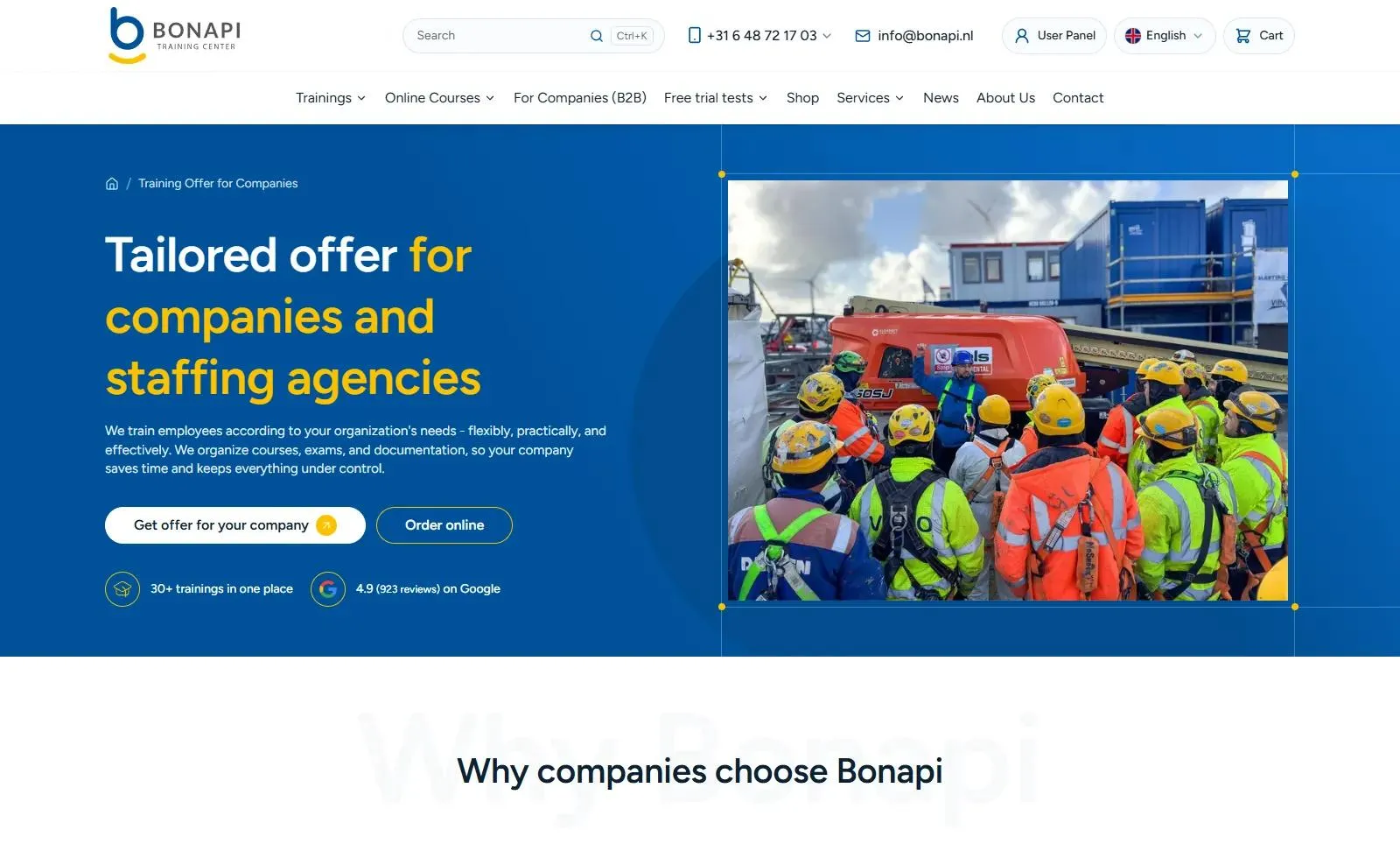
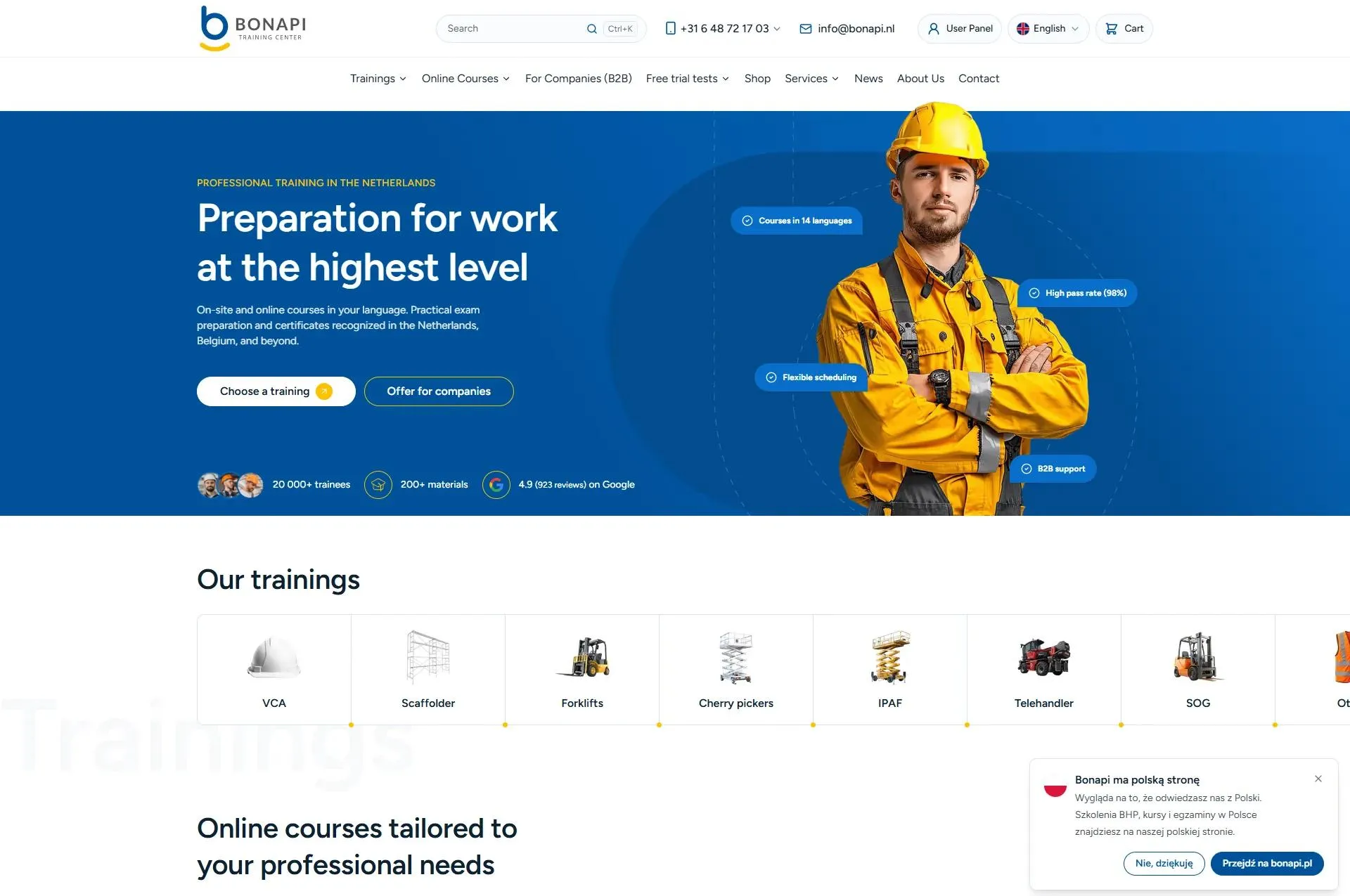
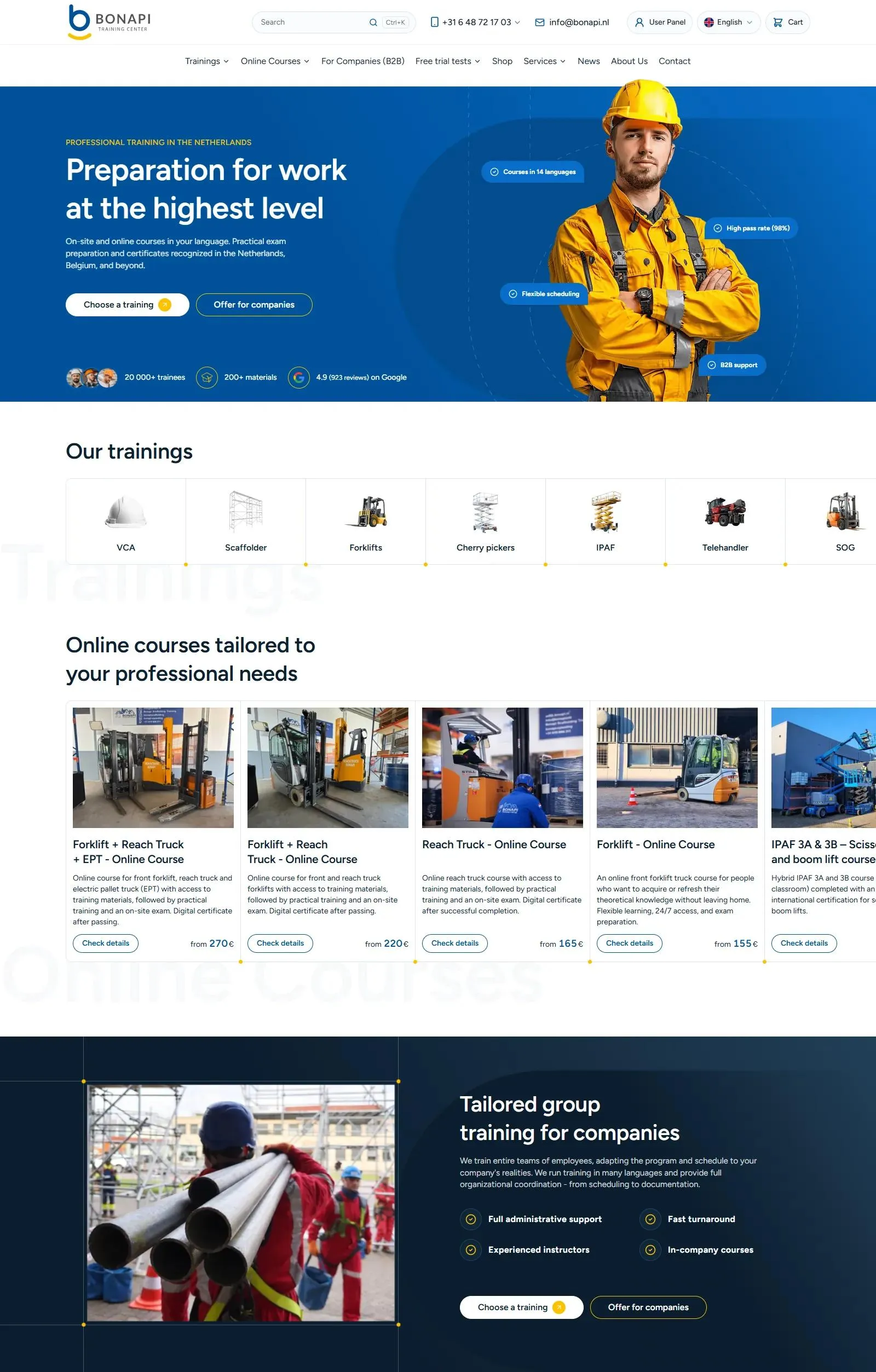
The bonapi.nl home page with training categories and the offer for companies.
The home page makes it easy to move on to a specific course or to the offer for companies and staffing agencies.

/ 01 problems and challenges

Scattered websites were holding back the growth of the offer and sales

Bonapi serves individual customers, companies and staffing agencies. Each of these groups chooses training differently, and the offer spans many languages, locations and dates. The previous WordPress sites were getting harder to develop and update. Changes had to be repeated in several places, and sign-ups often required contacting the team.

Bonapi needed a multilingual website that would organise the offer and let customers buy a course on their own. On top of that, a separate site had to be prepared for the Polish market, and the migration had to protect the visibility the old sites had built up.

What had to be solved

  • Make choosing easier for people buying a course for themselves and for companies signing up employees.
  • Connect the choice of language, location and date with online sign-up and payment.
  • Move the existing sites and prepare a separate offer for the Polish market.

/ 02 our process

A website design built on the needs of trainees and companies

We started by analysing the offer, the business goals and how customers are acquired. Together with the Bonapi team we defined what information someone buying a course for themselves needs, and what a company representative organising training for employees needs. We turned those findings into the site structure, the order of content and the purchase paths. Then we prepared wireframes and a custom visual design that also covered the configurator, the cart and the order form.

Two customer groups, different needs

For individual customers and for companies we drew up separate profiles: their goals, questions, concerns and criteria for choosing a course. Someone looking for a course for themselves needs information about the qualification, available languages, dates and price. A company representative also has to organise several employees' attendance, settle the purchase or arrange training at their own premises.

On that basis we planned the content layout and the paths between pages. We made sure a customer could quickly find the right course, and an employer could easily reach the offer for companies and staffing agencies.

Structure and wireframes before the visual design

For the key pages we defined what need brings a user there, what information they look for and what they should be able to do next. We then prepared wireframes showing the content hierarchy, navigation and purchase paths. They covered the offer pages as well as the cart, the order form and the purchase confirmation.

The wireframes let us review the whole process together with Bonapi before work on the look of the site began. At this stage we agreed the order of information and the scope of the forms, so that the visual design and the build would rest on an approved structure.
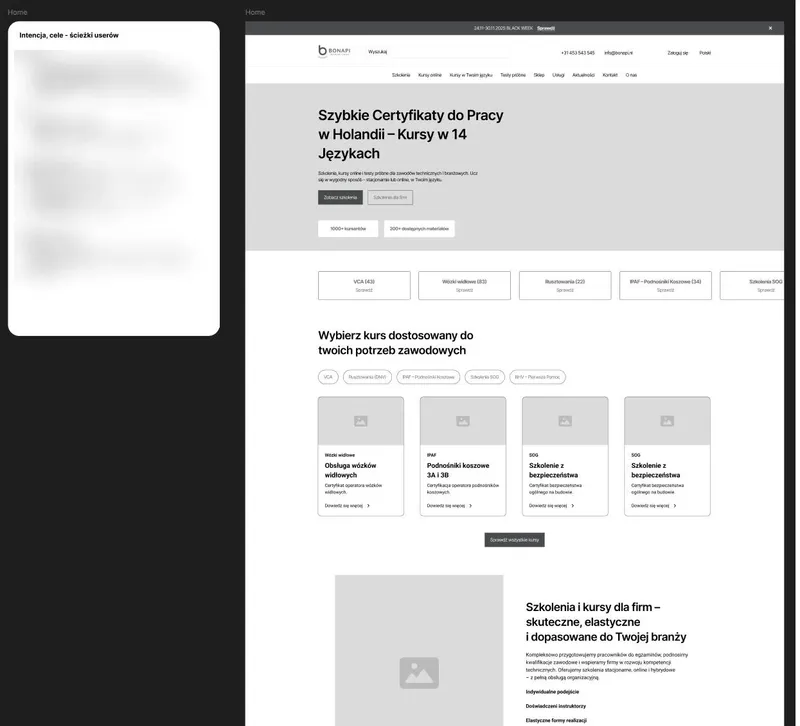
Wireframe of the bonapi.nl home page with notes on user needs.

On the wireframe we set the content hierarchy and the paths to each part of the offer.
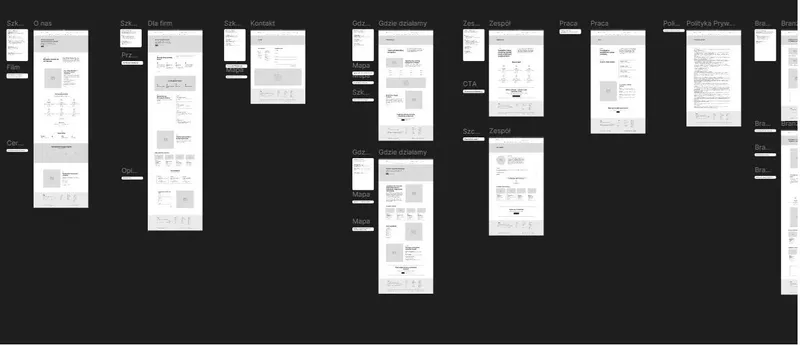
A set of bonapi.nl page wireframes in Figma.

We broke the site structure down into specific pages, covering the offer, information about the company and contact.

A design built on Bonapi's identity and experience

We prepared a custom visual design using the brand colours and authentic photos from the training centre. Next to the course information we placed customer reviews, instructor profiles and certification marks. This way visitors can get to know the company, its team and its facilities before they sign up.

We also designed every screen, from the home page to the cart and payment, in a phone version. Rather than squeezing the desktop layout into a narrower width, we arranged the content, the configurator and the forms for one-handed use. The design also covered the purchase screens. We agreed the layout and feedback with the client in Figma, and after approval we moved on to the build.
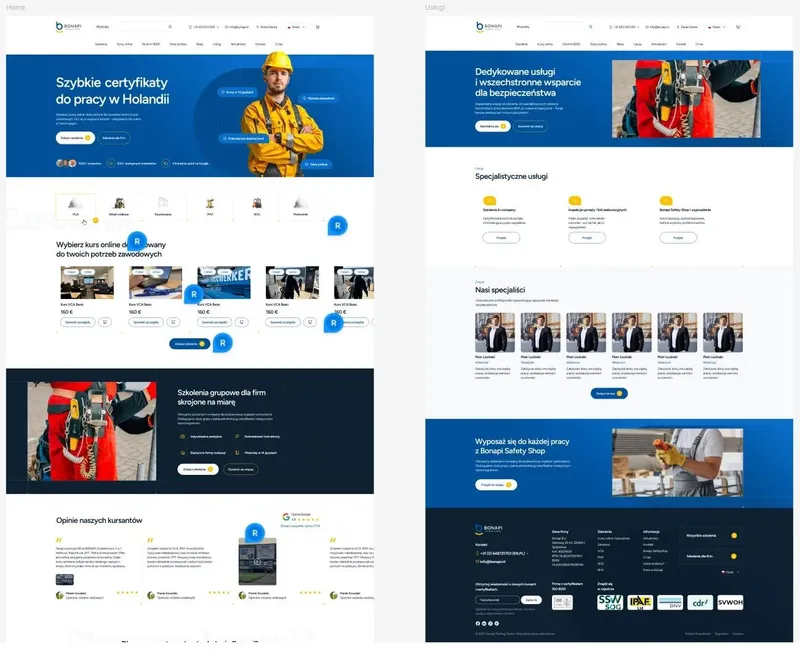
Visual design of the bonapi.nl home page and services page.

The visual design combines the brand colours with authentic photos and information about Bonapi's experience.

Buying a single course, and an offer for whole teams

For people looking for a course for themselves we provided training categories, site search and free practice tests. They can go from a specific qualification to the right course and its available options. A practice test opens in the Bonapi platform, where the trainee answers timed questions just like in the exam and checks straight away whether they are ready for the course.

For companies and staffing agencies we prepared a separate page with group training, training at the client's premises, equipment inspections and short toolbox talks. A company can place a simple order through the website by entering the participants' details and its invoice details. For more individual needs it can use an enquiry form.

Selling training online: from choosing a date to payment

When buying training, price is not the only thing that matters. The customer has to choose the right language, location, date and number of places. We brought all of these decisions together in a configurator that shows the cost of the order as they go. The buyer then enters the participants' details and moves on to online payment.

The integration with the Bonapi platform passes the order on for further handling without anyone re-entering the data. The same process lets a customer buy a course for one person or sign up several employees of a company.

Buying online covers both classroom training and courses run online.

A separate offer for each market

The bonapi.nl site serves the Dutch market. We prepared it in several languages so that customers can read about the courses in a version they understand. The Polish market got its own website, bonapi.pl, with a separate offer, prices in zloty and language versions, including Ukrainian.

The Polish site was built on the design and solutions developed for bonapi.nl. We could reuse the existing components and the purchase process, and focus the work on adapting the offer to the local market. Launching the second website did not require redesigning everything.

Each language version got its own page URLs. We also added prompts that help visitors move to the right market or language. Visitors decide for themselves whether to use them.

Content management without a developer for every change

The Bonapi team can update course descriptions, publish articles and manage reviews, instructor profiles and job listings on its own. We opened up this content in the Sanity panel, separately for each market and language. Prices and dates come from the sales platform, while changes to the site layout and the copy of fixed pages are handled as part of our maintenance.
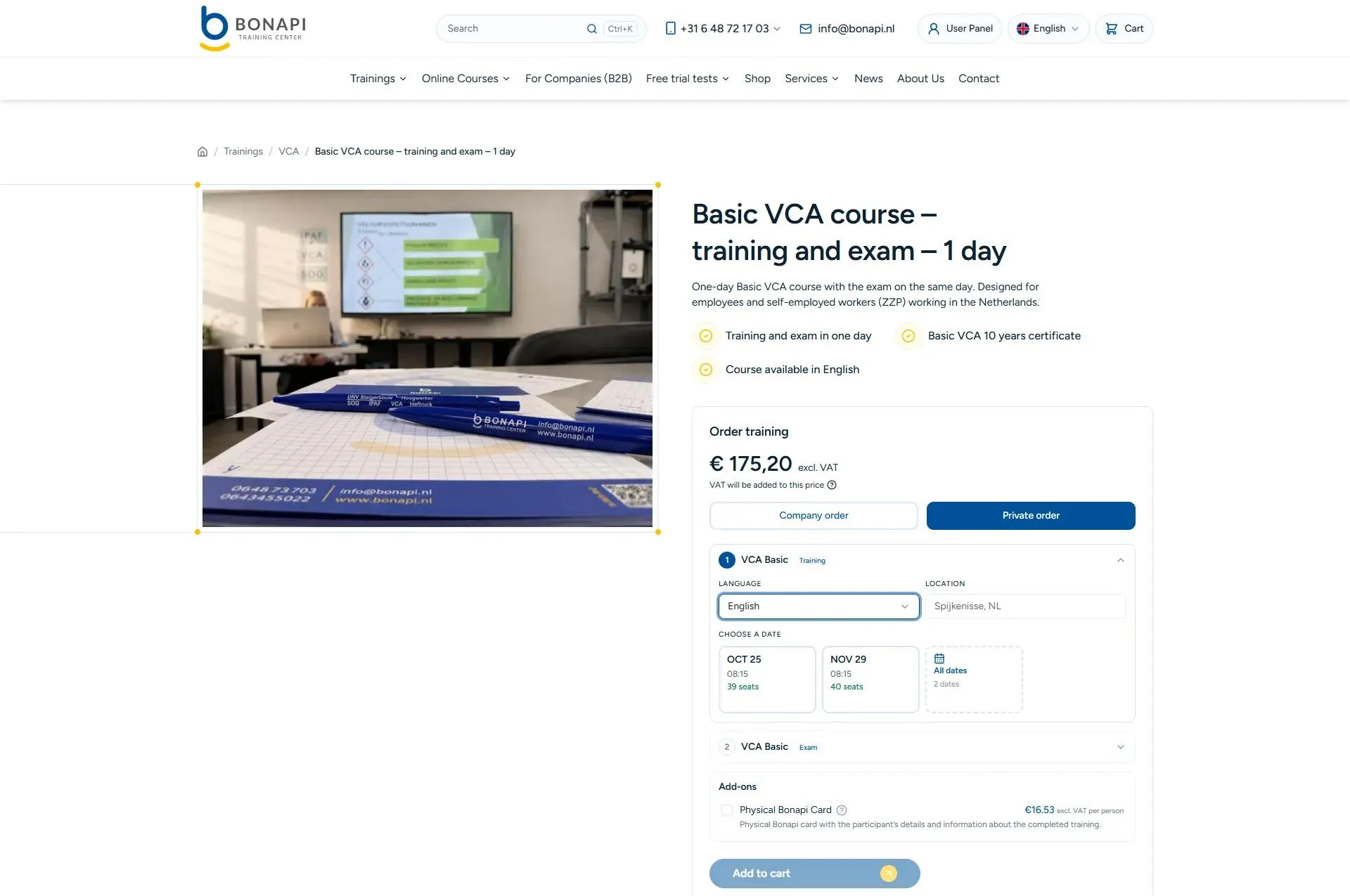
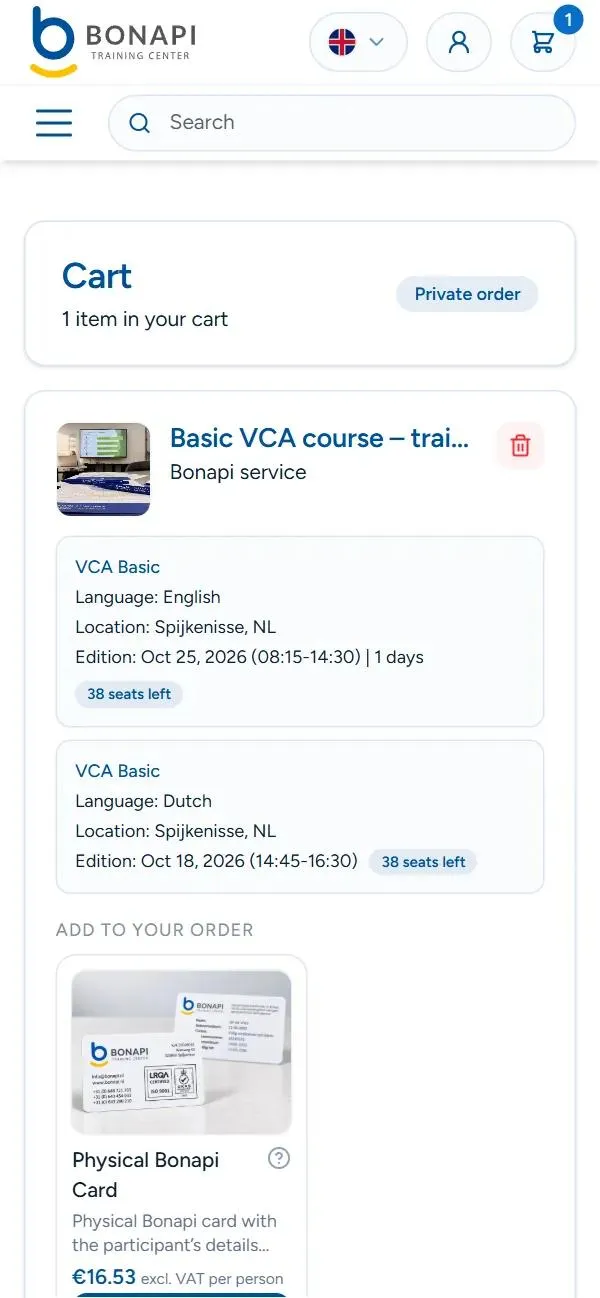
Choosing a course and reviewing the order in one purchase process.

01 The customer picks the course option and sees the order price before going to the cart.
The bonapi.nl mobile cart with the selected courses and an add-on.
02 The summary lays out the selected courses and add-ons before the participants' details and payment.

/ 03 technology, SEO and analytics

Choice of technology

We built both websites in Astro and run them on Cloudflare Workers. Content pages are generated as ready-made HTML files, and React handles the interactive elements such as the configurator, the cart and the search. This split combines a lightweight information layer with a full purchase flow.

We keep editorial content in Sanity and pull sales data from the Bonapi platform through an API. That way the offer, the visual layer and the sales features can grow without everything living in one CMS.

WordPress to Astro migration with SEO in mind

Before the new site went live, we put the existing URLs in order and matched each one to the right page in the new structure. We put in place 301 redirects, sitemaps and language and region tags. A WordPress to Astro migration prepared this way was meant to keep content reachable from old links and to reduce the risk of losing search traffic.

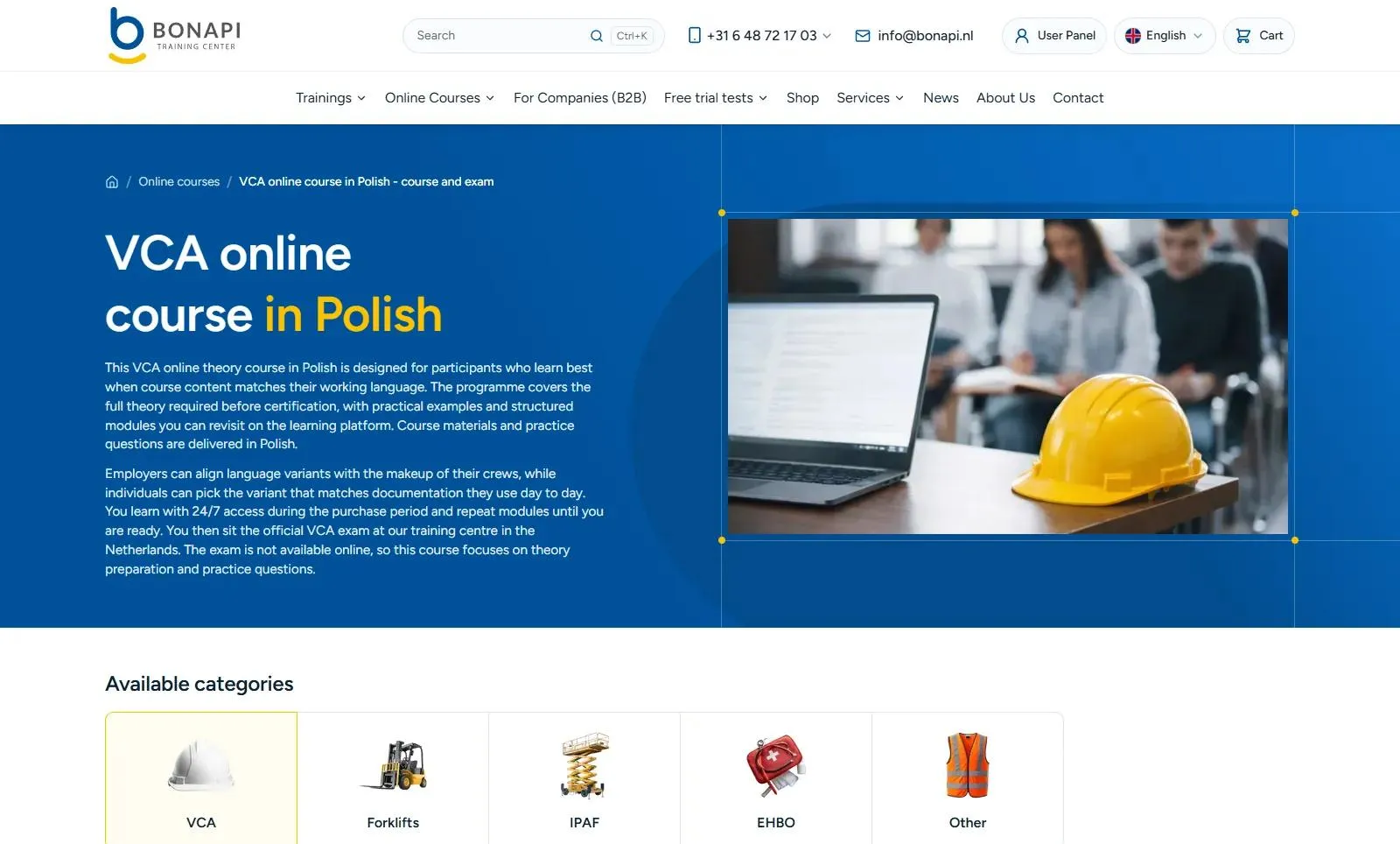
We also prepared pages that answer specific searches, such as a VCA course in Polish. That way users can land directly on the part of the offer they are interested in.

Content that answers specific searches

We implemented structured data describing, among other things, the organisation, the courses, the articles and the navigation. On the course pages we added answers to the questions that matter before buying. The aim was to present the offer clearly both to people and to systems that read the page content.

Measuring each stage of the purchase

We set up e-commerce analytics in GA4: from viewing a course, through adding it to the cart, to the purchase. The cookie banner and tracking follow GDPR and Google's requirements for advertising in the EU (Consent Mode v2), so Bonapi can measure traffic and attribute its ad campaigns lawfully. The data is meant to help Bonapi assess where orders come from and spot the stages where users drop out of the purchase.

An offer that matches the way customers look for training.

03 An employer finds the offer for teams and a form for agreeing the scope of the training in one place.
04 A page dedicated to courses in a specific language shortens the path from a search query to the right offer.

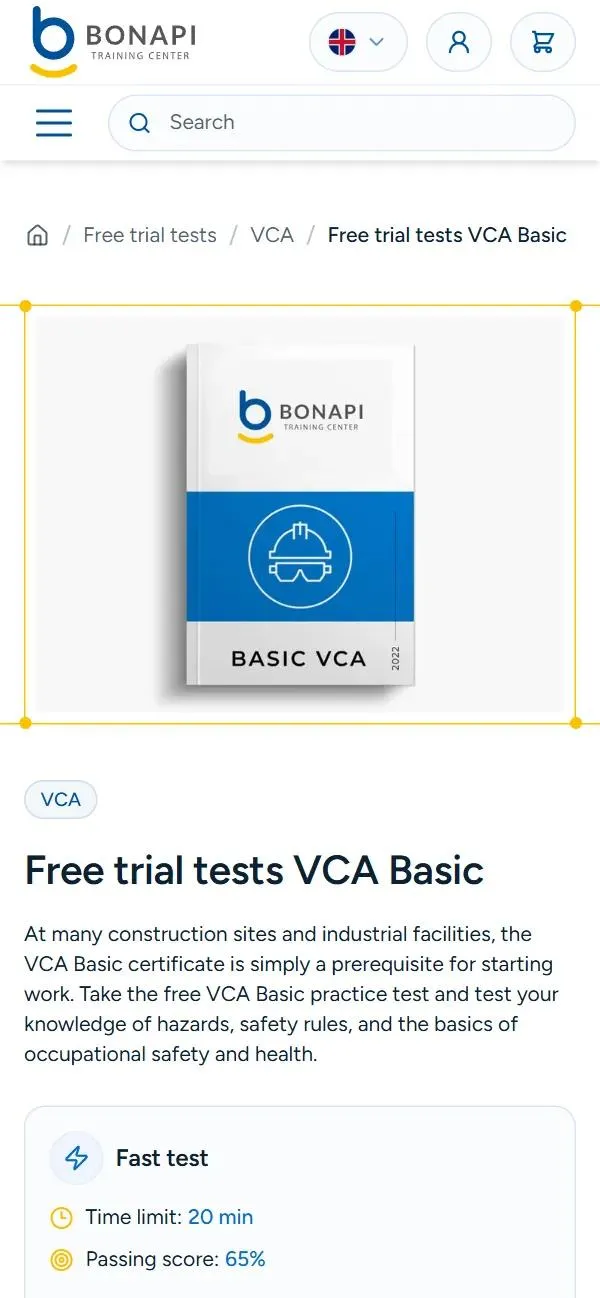
A free practice test from the website to the platform, and the Polish offer on a phone.

The free VCA Basic practice test page on bonapi.nl on a phone.
05 A practice test next to the course lets people check how ready they are for the exam before they buy.
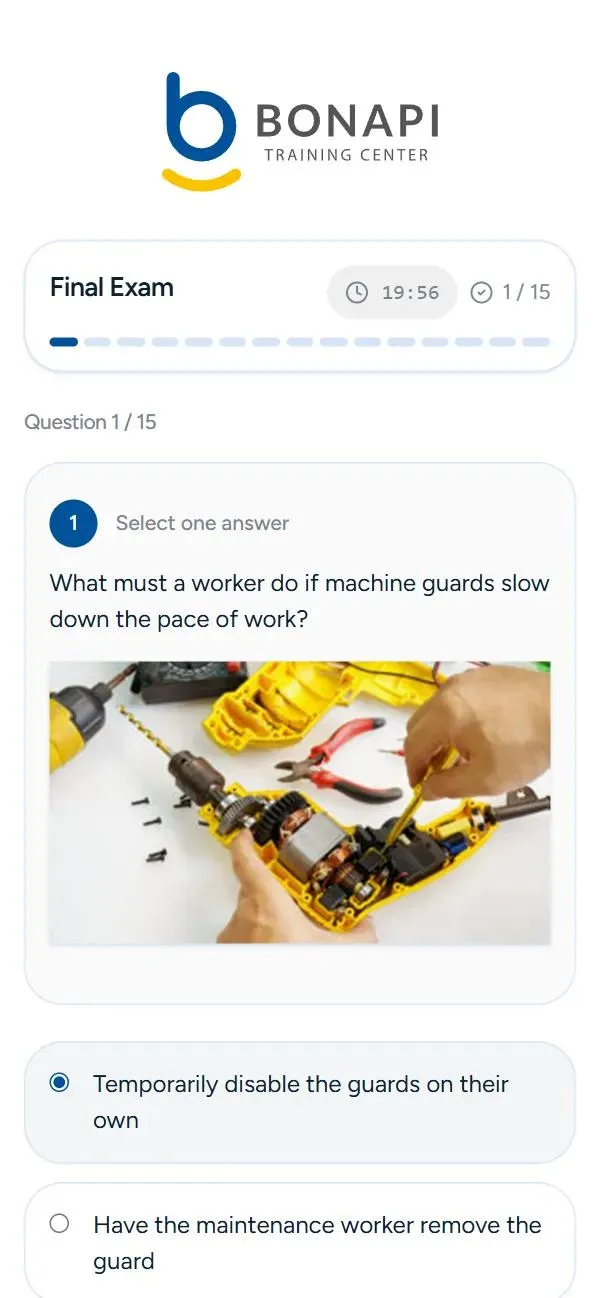
The VCA Basic test open in the Bonapi platform: a question with an illustration, answers and a timer.
06 The test runs in the Bonapi platform, timed and with exam-style questions, so the trainee sees straight away what to expect.
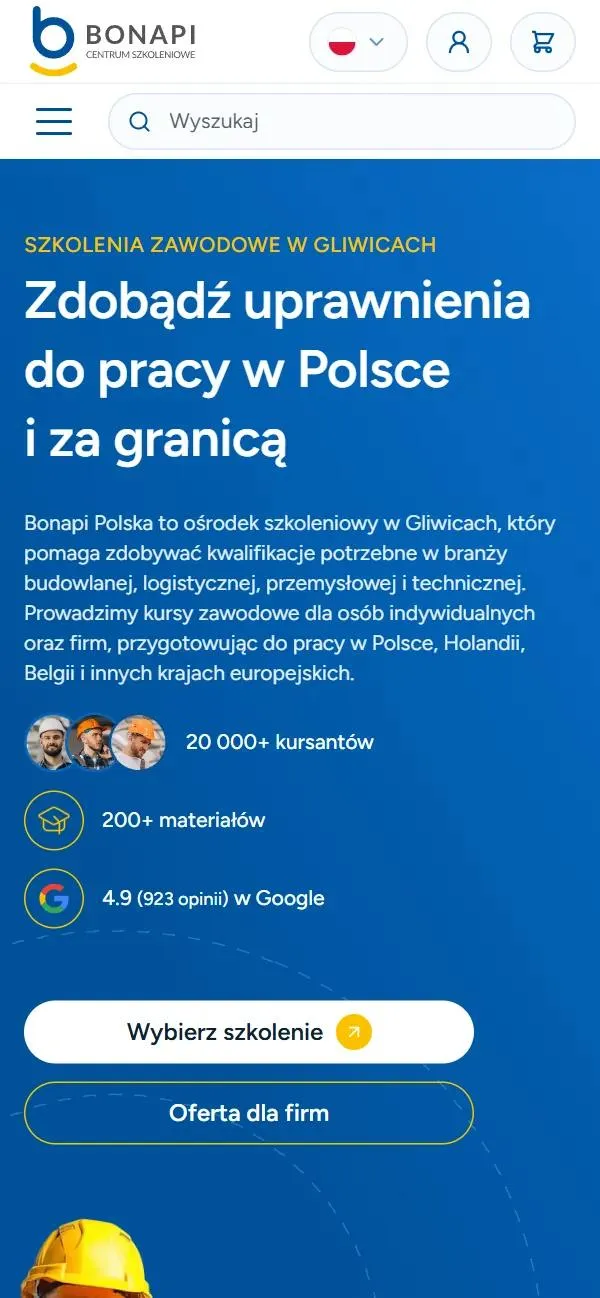
The bonapi.pl home page on a phone.
07 The Polish site presents the local offer using the design prepared earlier for bonapi.nl.

Moving to the Polish offer and buying in the local currency.

08 A visitor from Poland can go to the local offer or stay on bonapi.nl.
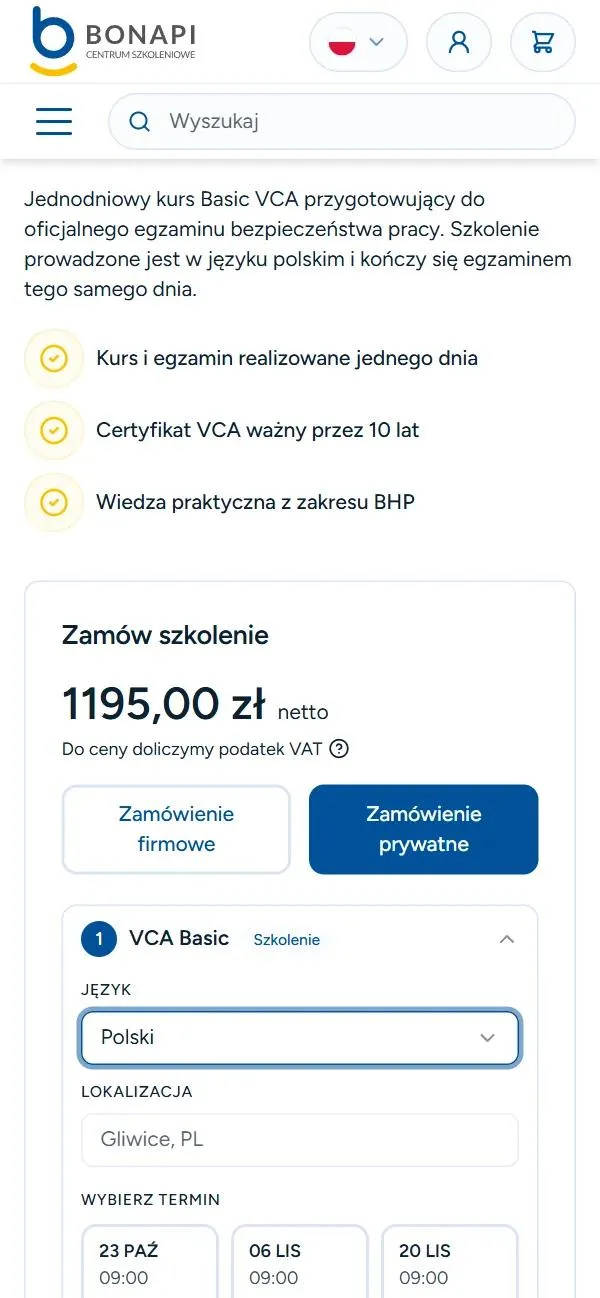
VCA course configurator on bonapi.pl with the price in zloty.
09 We adapted the purchase process to the Polish market, with prices in zloty and the details needed to issue an invoice.

About the Client

Industry: Education
Location: Spijkenisse, the Netherlands and Gliwice, Poland
Company Size:
Founded: 2018

Bonapi has run vocational and workplace safety training since 2018. The company was founded by Piotr Łoziński, who started out in the Netherlands as a scaffolder's labourer. His own working experience drew his attention to the need for training in the languages of workers arriving from other countries.

At its centre in Spijkenisse near Rotterdam the company runs, among other things, VCA courses, scaffolding training and forklift and aerial platform classes. It uses its own facilities and machines, and also trains at other locations, at clients' premises and online. In 2026 Bonapi opened a centre in Gliwice, extending its offer to health and safety training and vocational courses on the Polish market, including preparation for UDT licences.

Solutions we reused to enter the next market

The launch of bonapi.nl was the start of further work together. When preparing the Polish site, we reused the existing design, components and purchase process. That let us focus on the local offer, the language versions and payments in zloty.

We develop both websites as part of our ongoing cooperation, adapting them to the company's next needs.

Both sites are connected to the platform that handles orders, trainee accounts and online courses. This lets Bonapi develop its offer in each market using solutions that already exist. As our cooperation continues, we can extend the features in line with the Bonapi team's needs.

This setup works for any company that sells training or courses with dates. If you work in education, see how we approach websites and platforms for schools and course providers.

/ questions

Questions about the project

With business goals and customer needs. As part of the project we can analyse the offer, how sign-ups are handled and which tasks are worth automating. On that basis the site structure and the features it needs can be planned. In the Bonapi project the analysis covered the needs of individual customers and companies, as well as serving different markets and languages.

Yes. We can design separate paths for people buying a course for themselves and for companies signing up employees. Depending on the needs, the purchase process can handle several participants, invoice details or a form for a custom quote. For Bonapi we reflected the differences between these groups in the site structure, the way the offer is presented and the ordering process.

Yes, if the system allows the right data exchange. We can check whether the offer, prices and dates can be pulled in, and whether orders and participant details can be passed on. The scope of the integration depends on the available API, the system's limits and the company's needs. For Bonapi we connected the websites to a platform we also built for the client.

Not always. We can reuse the existing design and features if they fit the needs of the new market. Adjustments may cover the language, the offer, the currency, payments and the way orders are placed. We took this approach with bonapi.pl, reusing solutions prepared earlier for bonapi.nl. In another project, how much can be reused would depend on the differences between the markets and on how the existing site is built.

Preparing a migration can include analysing the existing URLs and content, planning redirects and setting up sitemaps and language tags. For Bonapi we took all of this into account when moving the existing sites. In a similar project the scope of work would depend on the site's structure, its visibility and the planned changes. The aim is to reduce the risk of losing traffic. Ranking fluctuations, however, cannot be ruled out.

Yes. We can set up a CMS panel that lets the team edit selected content without a developer. The scope of that editing depends on the team's needs and on how the website is built. At Bonapi the Sanity panel is used, among other things, to manage course descriptions, articles, reviews and instructor profiles. Prices and dates come from the sales platform, while changes to the layout and fixed pages remain part of our maintenance.

Yes, if the parts of the solution can be launched independently. We can propose a first stage covering the most important features and plan the rest as further development. Such a split depends on business goals, budget and how the features depend on each other. Whether a staged launch makes sense is worth assessing before the design work starts.

So, shall
we begin?

Book a meeting